Admit it, we’ve all been there: you pull your cake out of the oven, and in the pan it looked perfect: tall, fluffy, basically a little cloud of dreams. And then… it deflates. Flat, dense, and sad.
So what went wrong? Don’t worry , it’s not you. It’s actually science. A tiny, fascinating, delicious science. Who would’ve thought?
While your cake bakes, baking powder or baking soda are busy creating tiny carbon dioxide bubbles. These bubbles are what give your cake structure and make it rise. The tricky part is that if the bubbles don’t get trapped at the right moment, your cake will just collapse. Heat and structure have to work together: the eggs, sugar, and flour all need to bind just right to hold that precious air while the batter firms up. Think of it like teamwork for your dessert.
Balance is key
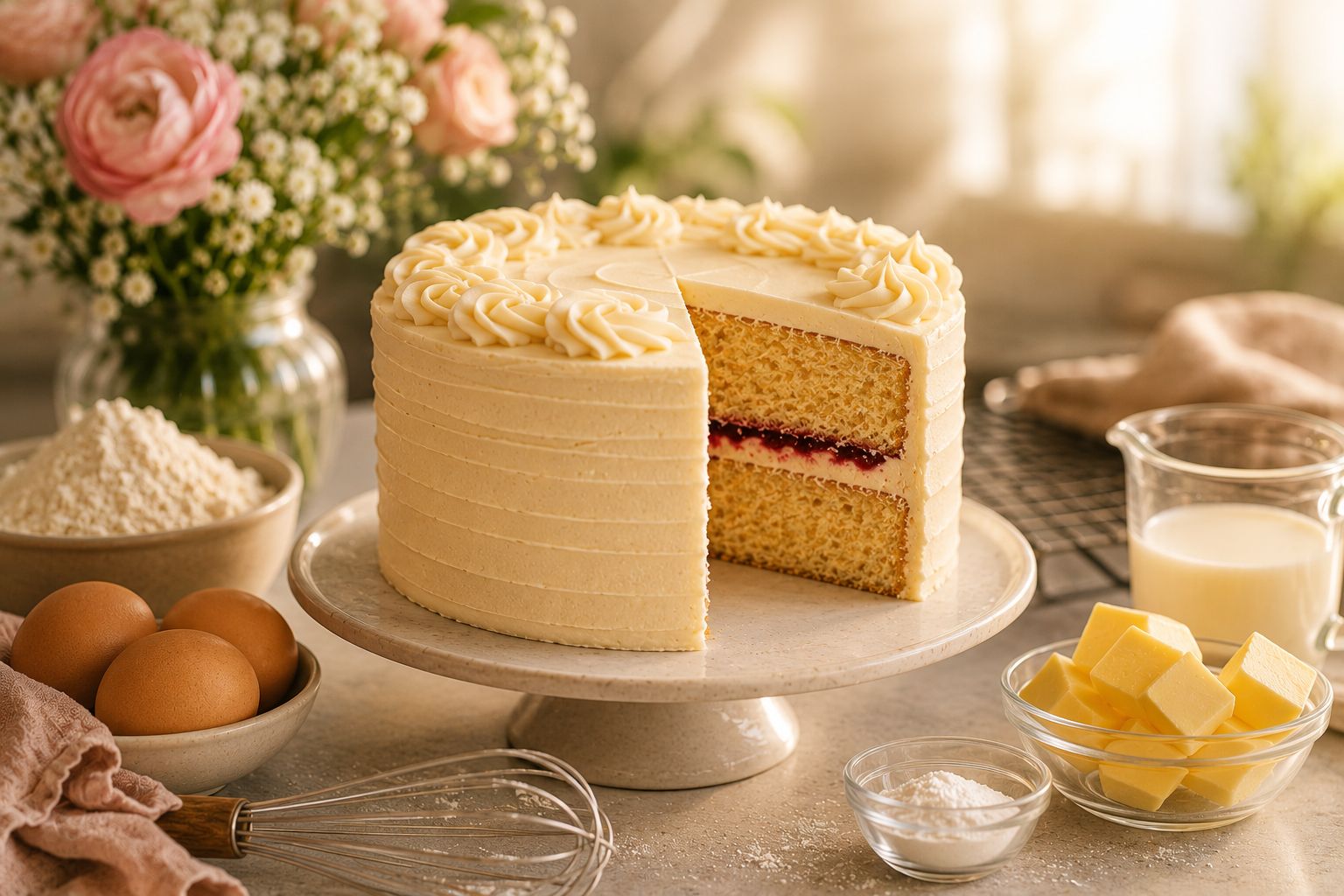
Then there’s the delicate balance of ingredients. Too much liquid, like milk, eggs, or oil, makes the batter heavy and the cake can’t hold itself. Too little flour or too much baking powder, and the cake might shoot up ambitiously, only to crumble because it doesn’t have the backbone to support itself. And if there’s too much butter or oil, while the flavor is amazing, the layers may just cave under their own weight. Baking is all about balance. A gram too much here or too little there can make the difference between cloud and pancake.
Make sure the temperature is just right
Oven temperature is another sneaky villain. If the oven is too hot, the outside sets too quickly while the inside stays gooey – take it out and the center sags. If the oven is too cool, the cake rises slowly and never fully sets. That’s why preheating the oven is crucial, and peeking during the first thirty minutes? Do yourself a favor and just don’t. Every tiny drop of heat matters to your cake.
Patience… A lot of it
Patience is everything, even in baking. If you take the cake out too early, the center hasn’t had time to set. Cool it too fast, and the air escapes. Let it rest for a few minutes in the off oven before moving it to the counter to cool naturally, away from drafts, and you’ll give it the best chance to keep its shape.
A few small things make a big difference: fresh baking powder keeps your rise alive, room-temperature ingredients mix more evenly, and not overmixing prevents the precious air bubbles from popping. For taller cakes, baking them a little longer at a slightly lower temperature often works wonders.
So, if your cake flops next time, don’t see it as a failure. It’s a science lesson in disguise. Every oven behaves differently, every egg has a personality, and even flour can be dramatic. Baking isn’t just an art, it’s a science that smells like vanilla, love, and a little bit of magic. And once you get the hang of it, your cakes won’t just taste amazing, but they’ll behave too.