The Science of Baking a Cake: Why Precision Beats Guesswork
In cooking, intuition carries the day. You toss a pinch of kosher salt into a simmering tomato sauce, taste from the wooden spoon, and adjust on the fly.
Baking tolerates none of that casual improvisation. Inside a pastry kitchen, an oven is not a heating box; it is a controlled chemical reactor. A discrepancy of fifteen grams of flour or thirty seconds too long in the mixer changes a velvet sponge into dry cardboard.
When you cut into an artisanal cake, you aren’t just tasting sugar and butter. You are experiencing hours of precise physics and chemistry working in exact harmony. Here is the hidden science behind how we craft each layer at our Manhattan atelier.
1. The Emulsion Battle: Blending Fat and Water
The foundational battle in cake making is forcing water and fat to live together peacefully.
European butter contains around 16% water trapped in fat, while whole eggs are roughly 75% water. Natural physics dictates that water and fat repel each other.
Room Temperature Calibration: If you add cold eggs to whipped room-temperature butter, the butter fat instantly contracts, chilling the mixture and curdling the batter into a grainy liquid.
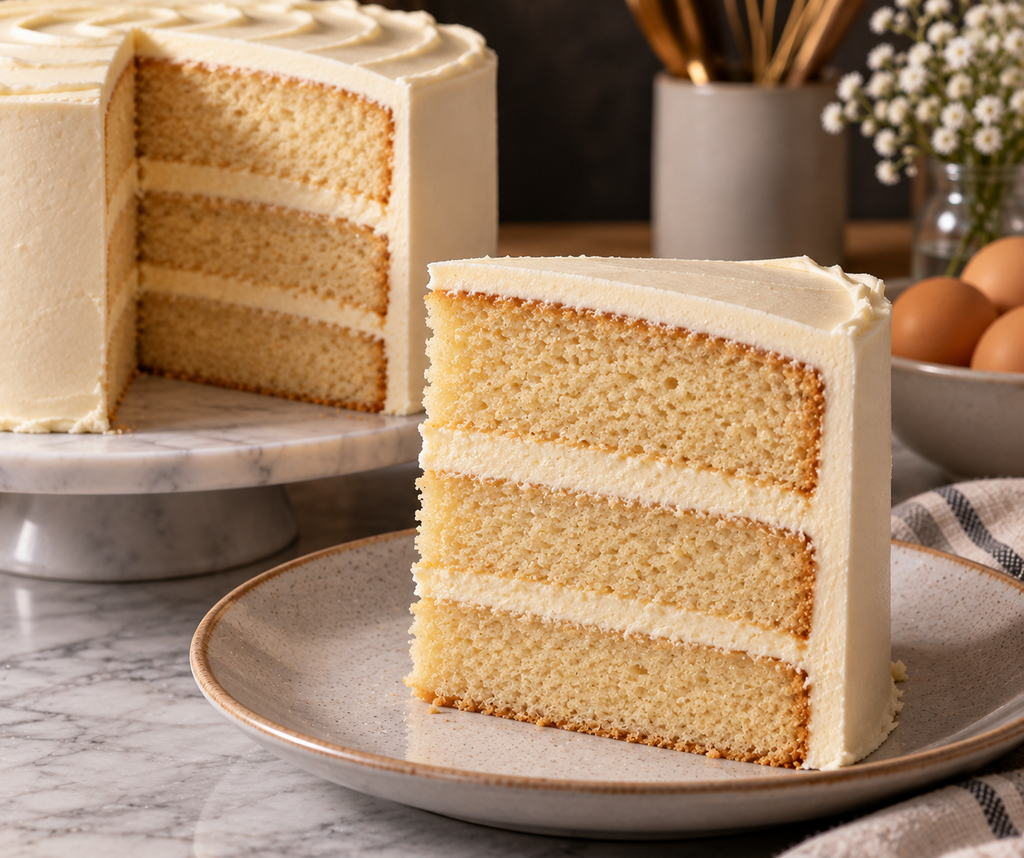
Creating the Suspension: By maintaining all dairy and eggs at an exact 68°F (20°C), the lecithin in egg yolks acts as a molecular bridge, trapping millions of micro-droplets of fat suspended in water. This tight emulsion traps air, yielding that delicate, melt-in-your-mouth crumb rather than a dense, greasy texture.
2. Gluten: The Invisible Architectural Scaffolding
Gluten forms when two wheat proteins-glutenin and gliadin-hydrate and link together through mechanical friction. In artisan bread, you knead aggressively to build strong, stretchy gluten ropes that trap gas bubbles.
In a luxury celebration cake, excessive gluten is the enemy.
Soft Pastry Flours: We choose non-GMO, low-protein wheat flours to minimize gluten formation before the batter even enters the mixer.
The Fat Barrier: By creaming high-butterfat butter directly with sugar, the fat coats the flour proteins in a microscopic oil slick. This “shortens” the protein strands (the origin of the term shortening), preventing heavy chewiness and delivering a tender, velvety crumb.
Pro Tip from Marie’s Kitchen:
Ever had a cake sink in the center like a crater? That is usually caused by opening the oven door too early. During the first twenty minutes, the structural proteins and starches are still liquid. Opening the oven lets cold air rush in, causing the expanding steam pockets to collapse before the egg proteins set permanently.
3. Oven Thermals: The Caramelization Window
A domestic oven thermostat is often off by 15°F to 25°F. In high-end pastry production, temperature control determines the entire structure of the cake:
320°F (The Maillard Threshold): Below this threshold, amino acids and natural sugars don’t react. Above it, the Maillard reaction triggers hundreds of new aromatic compounds, producing deep notes of toasted hazelnut, browned butter, and caramel on the crust.
Starch Gelatinization: Around 190°F internal cake temperature, wheat starches absorb residual moisture and swell, locking the cake into its final, stable shape. Pulling the cake out two minutes early leaves a gummy core; two minutes late leaves the crumb dry.
Mastered Chemistry, Unforgettable Celebrations
Understanding the science of pastry allows us to eliminate shortcuts. We don’t rely on chemical dough conditioners or artificial moisture retainers; we simply respect the physics of real ingredients.
Planning an upcoming birthday, wedding, or corporate event on the island? Discover our menu of precision-crafted cakes and start your Custom Cake Order today, or drop by our Manhattan kitchen to assemble your own selection of Sweet Bites.